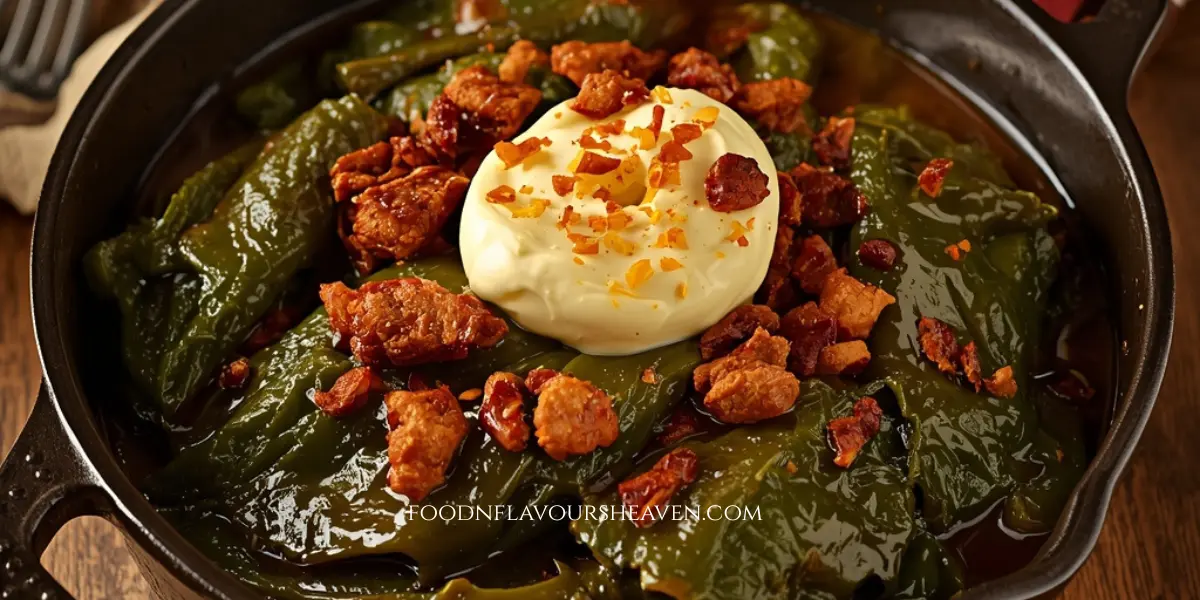
1 Ultimate Collard Greens Recipe: Bold Flavor A User Friendly Guide
When people talk about comfort food, collard greens don’t always get center stage but they should. After cooking greens professionally and at home for years, I’ve learned something surprising: the best collard greens recipe isn’t about long cooking alone. It’s about balance bitterness with brightness, softness with texture, and tradition with curiosity.
Before we even touch ingredients, here’s the unexpected truth: collard greens taste better when treated gently, not boiled into submission. Most people overcook them, oversalt them, or hide them under smoked meat without letting their natural earthiness shine. This recipe approaches collards differently drawing inspiration from Southern kitchens, African stews, Brazilian couve, and Mediterranean olive oil greens while keeping things simple, healthy, and deeply satisfying.
This guide walks you through ingredients, global techniques, cooking psychology, common mistakes, nutrition facts, and expert tips all in a fast, readable flow designed for real kitchens and busy cooks. you can also like these chicken breast recipes
Ingredients Needed for Making Collard Greens Recipe
Collard greens recipe are sturdy leafy vegetables from the brassica family, related to kale and cabbage. Their thick leaves hold up to slow cooking, sautéing, steaming, and braising — which makes them globally adaptable.
Core Ingredients
These form the base of almost every good collard greens dish:
- Fresh collard greens (1½–2 pounds, stems removed)
- Olive oil or avocado oil (2 tablespoons)
- Onion (1 medium, sliced thin)
- Garlic (3 cloves, minced)
- Vegetable broth or chicken stock (1½ cups)
- Apple cider vinegar or lemon juice (1 tablespoon)
- Salt and cracked black pepper (to taste)
Flavor Boosters (Optional but Powerful)
These add complexity without overpowering the greens:
- Smoked paprika or red pepper flakes
- Bay leaf
- Ginger or turmeric
- Soy sauce or coconut aminos
- Smoked turkey, ham hock, or mushrooms (for umami)
Expert note: I often use mushrooms instead of meat when cooking for clients who want plant-based meals but still crave depth. Sautéed shiitakes deliver that smoky richness naturally.
A Global Collard Greens Recipe Methods, Process, and Care
Instead of presenting one rigid recipe, here’s a world-inspired approach that lets you choose your style Southern slow-simmered, Brazilian sautéed, African spiced, or Mediterranean lemon-forward using the same foundation.
Step 1: Clean the Greens Properly
Collard greens grow close to soil and trap grit in their folds. Wash them in cold water, separate leaves, and repeat until no sand remains. Shake dry or spin gently.
Care tip: Don’t soak too long — waterlogged greens lose flavor and structure.
Step 2: Cut with Intention
Remove thick stems and stack leaves. Roll tightly and slice into ribbons. This helps even cooking and creates better mouthfeel.
Step 3: Build the Flavor Base
Heat oil in a wide pot over medium heat. Add onions and cook until translucent not browned. Add garlic and spices. Stir until fragrant.
This stage matters more than most people realize. Aroma = foundation.
Step 4: Add Greens in Batches
Add collards gradually. They wilt fast. Toss gently to coat with oil and aromatics. This reduces bitterness naturally.
Step 5: Choose Your Global Path
Southern-Style Braised Collards
- Add broth, bay leaf, smoked turkey or mushrooms.
- Simmer covered for 40–50 minutes.
- Finish with vinegar.
Brazilian Couve (Quick Sauté)
- Skip broth.
- Cook sliced greens in olive oil and garlic for 5 minutes.
- Finish with lime juice and salt.
West African-Inspired Greens
- Add ginger, chili flakes, tomato paste, and peanut broth.
- Simmer until tender.
- Serve with rice or yams.
Mediterranean Greens
- Use olive oil, garlic, lemon zest, and white beans.
- Add oregano or thyme.
- Finish with olive oil drizzle.
Step 6: Taste, Adjust, Rest
Salt after cooking not before. Acid at the end lifts bitterness. Let greens rest 5 minutes before serving for deeper flavor.
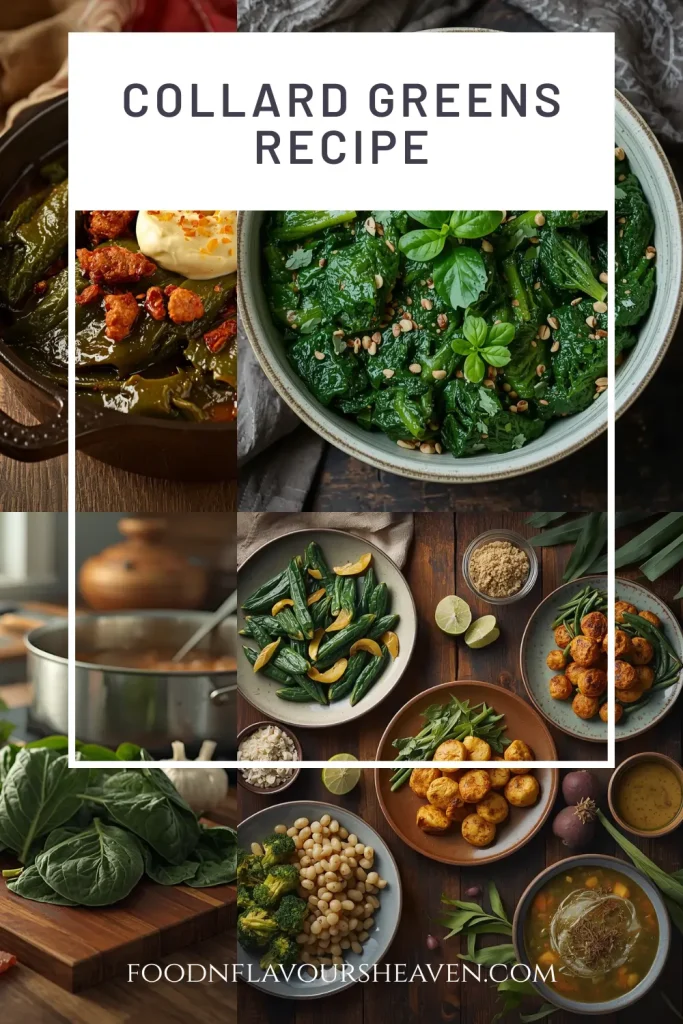
Tips to Making Collard Greens Recipe Better
These insights come from both home cooking and professional kitchens:
- Salt later, acid last. Early salt toughens leaves. Late acid brightens flavor.
- Slice thinner than you think. Thin ribbons cook evenly and feel tender faster.
- Don’t drown them. Too much liquid dilutes flavor. Greens should braise, not swim.
- Use layered heat. Fresh garlic + chili flakes + smoked paprika = depth without burn.
- Let bitterness work for you. Slight bitterness balances rich foods like cornbread, beans, or roasted meats.
Contrarian truth: Longer cooking doesn’t always mean better greens. Some collard varieties shine when lightly sautéed preserving texture, chlorophyll, and nutrients.
What Not to Do While Making Collard Greens Recipe
Even experienced cooks make these mistakes:
- Don’t skip washing. Grit ruins the dish instantly.
- Don’t boil aggressively. High heat toughens fiber and drains nutrients.
- Don’t oversmoke. Too much smoked meat masks natural flavor.
- Don’t under-season. Greens need salt, acid, and fat — not one alone.
- Don’t crowd the pan. Steaming instead of sautéing dulls flavor.
Psychology of greens cooking: people fear bitterness, so they overcompensate with sugar or fat. Instead, balance bitterness with acid and aromatics it’s cleaner and healthier.
Servings and Nutritional Values of Collard Greens Recipe
This recipe yields 4 servings as a side dish or 2 servings as a main when paired with grains or protein.
Nutritional Breakdown (Per Serving – Approximate)
- Calories: 90–120
- Fiber: 5g
- Protein: 4g
- Vitamin K: 300% DV
- Vitamin A: 70% DV
- Vitamin C: 45% DV
- Calcium: 25% DV
- Iron: 15% DV
Collard greens are:
- Low-calorie
- High-fiber
- Antioxidant-rich
- Bone-supportive
- Heart-friendly
They support digestion, immune function, and inflammation control — especially when paired with healthy fats that improve nutrient absorption.
Why This Recipe Works (From a Practitioner’s View)
Cooking collard greens recipe well isn’t about tradition alone it’s about understanding leaf structure, bitterness chemistry, fiber breakdown, and flavor layering. When you combine slow heat with acid balance and aromatic fat, collards become not just edible but crave-worthy.
Historically, greens were survival food nutrient-dense, inexpensive, and long-lasting. Today, they’ve evolved into wellness food, chef food, and global comfort food. The best recipes respect both past and present simple methods, modern flavor profiles, and clean nutrition.
Personally, I used to overcook collards. Then I tested them sautéed, grilled, pressure-cooked, lemon finished, ginger infused. The takeaway? Greens don’t need rescuing. They need clarity.
fAQs
1. Are collard greens recipe safe to eat every day?
Yes, collard greens recipe are safe for daily consumption when eaten in balanced portions. They are high in vitamin K, so people on blood-thinning medications should consult their doctor.
2. Can I make collard greens recipe without meat?
Absolutely. Plant-based versions using mushrooms, smoked paprika, garlic, and broth deliver rich flavor without animal products.
3. Do collard greens recipe need long cooking to become tender?
Not always. Thinly sliced collards sautéed over medium heat become tender in under 10 minutes. Slow cooking is optional, not mandatory.
4. Can I use frozen collard greens?
Yes. Frozen collards work well in soups, stews, and braised dishes. Reduce cooking time and adjust seasoning since frozen greens release more water.
5. What’s the best way to store cooked collard greens recipe?
Store in an airtight container in the refrigerator for up to 4 days. Flavor often improves overnight due to ingredient absorption.
Conclusion
Collard greens are more than a side dish they’re a canvas. Whether slow-simmered Southern-style, quickly sautéed Brazilian-style, or spiced West African-inspired, collards reward thoughtful cooking. When you balance bitterness with acid, texture with time, and simplicity with seasoning, these leafy greens transform into something grounding and deeply nourishing.
This recipe doesn’t just teach you how to cook collard greens it teaches you how to understand them. And once you do, you’ll never look at leafy greens the same way again.