Potato Soup Recipes You’ll Want to Make on Repeat (3)
Most people think potato soup recipes is about cream, cheese, and thickness. After cooking professionally and testing countless home batches, I’ve learned something different: great potato soup is really about balance starch, salt, heat, and timing. When those four elements work together, you don’t need heavy ingredients to make something deeply satisfying.
Potato soup has lasted across cultures, budgets, and food trends because potatoes adapt. They absorb flavor, soften naturally, and thicken without flour. That’s why this dish works for vegan cooking, family meals, meal prep, and comfort dinners alike.
Instead of starting with ingredients, I’ll start with the outcome: the best potato soup feels warm but light, filling but clean, creamy but not heavy. Let’s work backward from that result and explore ingredients, recipes, nutrition, technique, and seasonal timing all through real kitchen experience. If you want to make Collard Greens Recipe then check this recipe.
Ingredients for Potato Soup Recipes
Potato soup ingredients look simple, but each one plays a functional role in texture, aroma, and flavor depth. Over time, I stopped treating them as a list and started treating them as tools.
Core Ingredients:
- Potatoes (Russet, Yukon Gold, or red potatoes)
- Onion or leek
- Garlic
- Butter or olive oil
- Vegetable broth or chicken stock
- Milk, cream, or plant milk
- Salt and black pepper
Flavor Builders:
- Thyme, bay leaf, rosemary
- Smoked paprika, white pepper
- Green onions, parsley, chives
- Lemon juice or apple cider vinegar
Optional Add-ins:
- Bacon, cheddar cheese, sour cream
- Mushrooms, corn, spinach
- Cashew cream or nutritional yeast
From experience, Yukon Gold potatoes give buttery texture, Russets give thickness, and red potatoes hold shape. Combining varieties creates better mouthfeel than using just one.
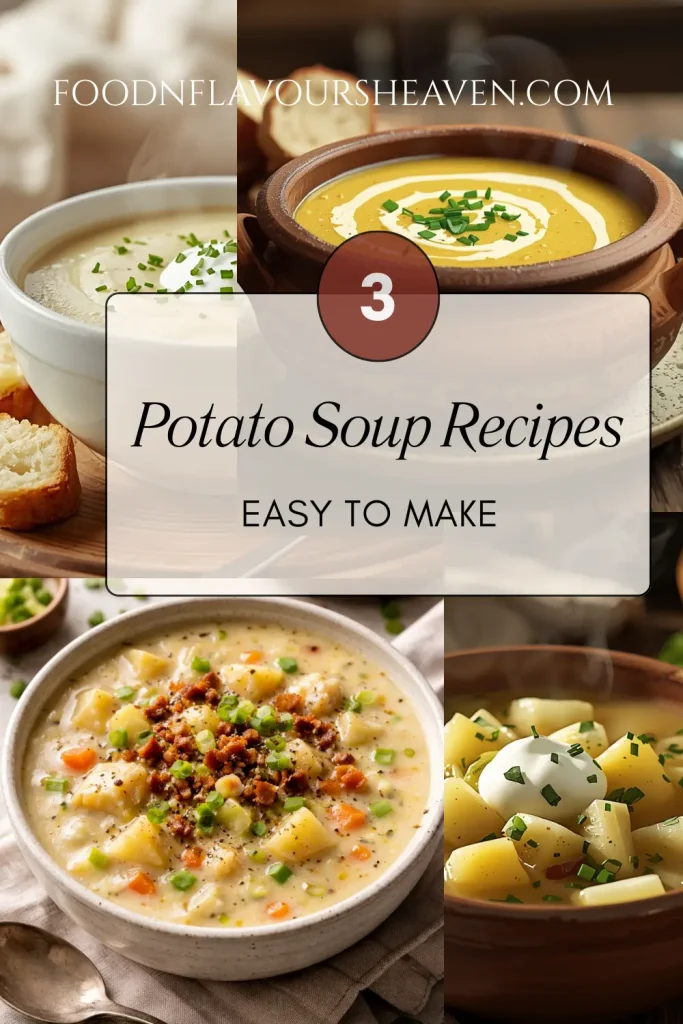
How to Make Potato Soup Recipes (3 Different Styles)
Instead of giving three versions that feel repetitive, I’m sharing three function-based recipes — one focused on creaminess, one on freshness, and one on protein satisfaction.
1. Classic Creamy Potato Soup (Comfort-First Style)
This version delivers the smooth, cozy texture most people expect — but without feeling heavy or greasy.
Ingredients:
- 4 medium Russet potatoes, peeled and diced
- 1 onion, chopped
- 2 garlic cloves, minced
- 3 cups chicken or vegetable broth
- 1 cup milk or light cream
- 2 tablespoons butter
- Salt and black pepper
- Optional: shredded cheddar, green onions
Process:
- Melt butter in a soup pot over medium heat. Add onion and cook until soft.
- Stir in garlic and cook for 30 seconds.
- Add potatoes and broth. Simmer 15–18 minutes until fork-tender.
- Blend half the soup using a hand blender.
- Stir in milk, salt, and pepper.
- Top with cheese or herbs if desired.
Why this works: Partial blending creates natural thickness without starch slurry. Milk softens edges without masking potato flavor.
2. Rustic Chunky Potato Soup (Farmhouse Style)
This soup focuses on texture contrast, vegetable aroma, and slow flavor release.
Ingredients:
- 3 Yukon Gold potatoes, cubed (skin on)
- 1 leek or onion, sliced
- 2 carrots, chopped
- 1 celery stalk, diced
- 4 cups vegetable broth
- 1 tablespoon olive oil
- Fresh thyme, bay leaf
- Salt and cracked black pepper
Process:
- Heat olive oil in a pot. Add leeks, carrots, and celery. Cook until fragrant.
- Add potatoes, herbs, and broth.
- Simmer uncovered 20 minutes.
- Remove bay leaf. Mash a few potatoes for thickness.
- Season and serve with bread.
Why this works: Leaving skins adds fiber and earthiness. Mashing instead of blending preserves structure.
3. Vegan Creamy Potato Soup (Dairy-Free Style)
This version proves you don’t need cream for richness — just smart starch control.
Ingredients:
- 4 Yukon Gold potatoes, chopped
- 1 onion, diced
- 2 garlic cloves
- 3 cups vegetable stock
- ¾ cup unsweetened oat milk or cashew milk
- 2 tablespoons olive oil
- Nutritional yeast (optional)
- Lemon juice, salt, pepper
Process:
- Sauté onion in olive oil until translucent.
- Add garlic, then potatoes and broth.
- Simmer 15 minutes until soft.
- Blend fully until smooth.
- Stir in plant milk, yeast, lemon juice, salt, and pepper.
Why this works: Potatoes emulsify with plant milk naturally, giving creaminess without dairy separation.
Nutritional Values in Potato Soup Recipes
Potato soup gets unfair criticism as “carb-heavy,” but nutritionally, it’s far more balanced than people assume.
Potatoes provide:
- Potassium for heart health
- Vitamin C for immunity
- Fiber for digestion
- Complex carbohydrates for sustained energy
Typical Nutrition (Per Bowl):
- Calories: 180–300 depending on fat and toppings
- Protein: 4–10g
- Fiber: 3–5g
- Fat: Adjustable based on dairy or oil
Vegan potato soup tends to be lower in saturated fat. Chunky vegetable versions increase fiber and micronutrients. Adding beans, chicken, or Greek yogurt increases protein density.
From personal cooking experience, potato soup works well for:
- Weight-balanced meals
- Digestive comfort food
- Post-workout recovery
- Budget meal planning
Tips for Making Potato Soup Recipes Better
Most potato soup problems come from timing errors, not ingredients.
Here’s what consistently improves results:
- Salt in layers: Season onions early, broth mid-way, finish at the end.
- Avoid boiling hard: Gentle simmer prevents grainy texture.
- Use acid: A few drops of lemon juice brighten the entire pot.
- Blend partially: Full blending can feel gluey. Hybrid texture works best.
- Choose fat wisely: Olive oil keeps flavor clean, butter adds warmth, cream softens edges.
One contrarian truth: cheese-heavy soups often taste flat without acid. Always balance richness with brightness.
Which Season Is Best for Potato Soup Recipes?
Most people associate potato soup with winter, but in real kitchens, it’s a year-round dish with seasonal adjustments.
- Fall & Winter: Creamy versions with herbs, garlic, and root vegetables
- Spring: Lighter broths with leeks, parsley, lemon zest
- Summer: Chilled potato soup (vichyssoise-style) or thin herb-infused versions
Cold weather increases cravings for starch and warmth, but lighter potato soups work surprisingly well during warmer months when paired with salads or grilled vegetables.
FAQs
Is potato soup healthy?
Yes. Potato soup is nutrient-dense when prepared with whole ingredients, moderate fats, and minimal processed toppings. Potatoes provide potassium, fiber, and vitamin C, while broth supports hydration and digestion.
Can I make potato soup recipes without cream or milk?
Absolutely. Potatoes naturally thicken soup when blended. You can use olive oil, oat milk, cashew milk, or just broth and still achieve a creamy texture.
Which potatoes are best for potato soup recipes?
Russet potatoes create smooth texture due to high starch. Yukon Gold potatoes offer buttery flavor and better shape retention. Combining both gives the best results.
Can potato soup be frozen?
Yes. Freeze without dairy for best texture. Add milk or cream after reheating. Stored properly, potato soup lasts up to 3 months in the freezer.
How do I thicken potato soup naturally?
Blend part of the soup, mash some potatoes, or simmer uncovered to reduce liquid. Avoid flour unless necessary potatoes already contain natural starch.
Conclusion
Potato soup recipes works not because it’s simple, but because it’s flexible. It adapts to dietary needs, seasonal shifts, ingredient availability, and emotional comfort. Over years of cooking it in restaurants and home kitchens, I’ve found that the best versions aren’t overloaded they’re balanced. Balanced in texture, salt, fat, acidity, and timing.
Whether you prefer creamy potato soup, chunky farmhouse soup, or vegan dairy-free versions, the foundation stays the same: good potatoes, steady heat, layered flavor, and restraint. When you understand those principles, potato soup becomes less of a recipe and more of a reliable cooking skill one you can repeat, adjust, and improve without ever checking measurements again.
And that’s why potato soup never disappears from kitchens. It evolves quietly, steadily, and always warmly.