Easy French Toast Recipe – Golden & Crispy in 15 Minutes
Most people think French Toast recipe is about syrup, sweetness, and weekend indulgence. After years of making this dish across different kitchens, cultures, and breakfast scenarios, I’ve learned something different: great French Toast is really about texture contrast, egg ratios, heat control, and bread selection. When those four elements align, you don’t need excessive toppings to create something genuinely satisfying.
French Toast has survived across continents, economic conditions, and dietary trends because stale bread transforms. It absorbs custard, caramelizes beautifully, and delivers comfort without complexity. That’s why this dish works for quick breakfasts, weekend brunches, budget cooking, and salvage meals alike.
Instead of starting with ingredients, I’ll start with the outcome: the best French Toast feels crispy outside but custardy inside, sweet but not cloying, rich but not heavy. Let’s work backward from that result and explore ingredients, techniques, variations, nutrition, and preparation wisdom all through real kitchen experience. For even crispier results with less oil, you can also try air fryer recipes methods that work perfectly for French Toast.
Ingredients for French Toast Recipes
French Toast ingredients look basic, but each one plays a functional role in structure, flavor development, and final texture. Over time, I stopped treating them as a shopping list and started treating them as building blocks.
Core Ingredients:
- Bread (day-old preferred: brioche, challah, sourdough, or white bread)
- Eggs (3 large for 6 slices)
- Milk or cream (whole milk recommended)
- Butter for cooking
- Salt (small pinch)
Flavor Builders:
- Vanilla extract
- Cinnamon, nutmeg
- Sugar or honey
- Orange zest, almond extract
Optional Enhancements:
- Maple syrup, powdered sugar
- Fresh berries, bananas
- Cream cheese, mascarpone
- Nuts, chocolate chips
From experience, brioche gives buttery richness, challah provides structure, sourdough adds tang, and basic white bread delivers nostalgic simplicity. Stale bread matters more than bread type as fresh bread becomes soggy mush.
How to Make French Toast recipe (3 Different Styles)
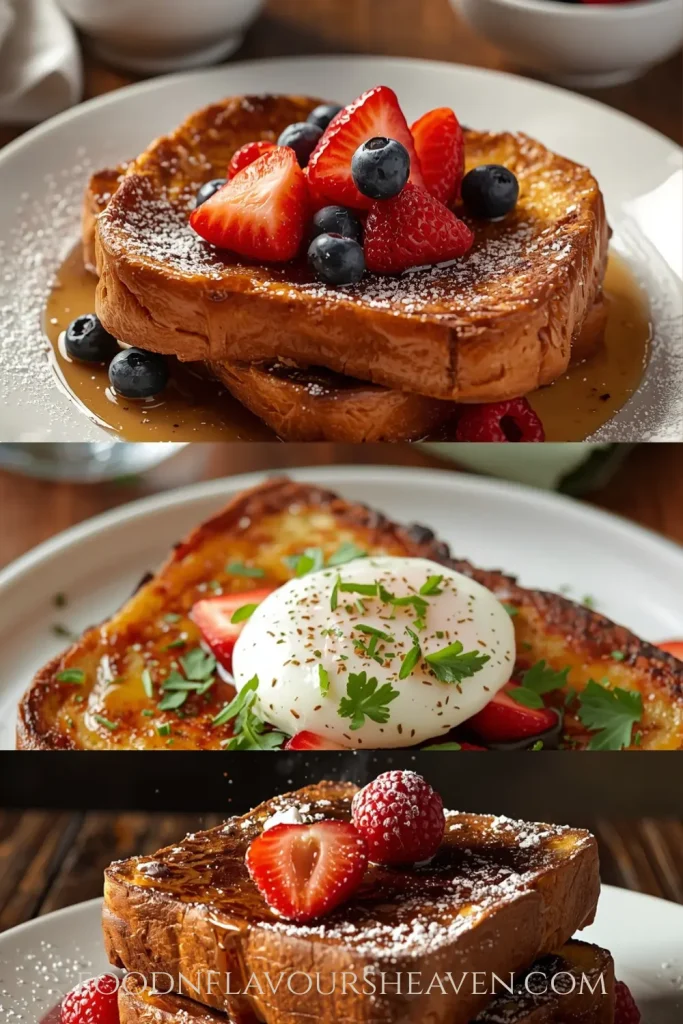
Instead of giving three versions that feel identical, I’m sharing three function-based approaches—one focused on classic comfort, one on savory satisfaction, and one on decadent indulgence.
1. Classic Cinnamon French Toast recipe (Traditional Style)
This version delivers the warm, spiced texture most people crave—but without becoming sugar-heavy or one-dimensional.
Ingredients:
- 6 slices thick bread (¾-inch cut), preferably day-old
- 3 large eggs
- ½ cup whole milk
- 1 teaspoon vanilla extract
- 1 teaspoon ground cinnamon
- ¼ teaspoon nutmeg (optional)
- 1 tablespoon sugar
- Pinch of salt
- 2–3 tablespoons butter for cooking
- Maple syrup and powdered sugar for serving
Process:
- Whisk eggs thoroughly in shallow dish until yolks blend completely
- Add milk, vanilla, cinnamon, nutmeg, sugar, and salt—mix until uniform
- Heat skillet or griddle over medium heat, melt butter portion
- Dip bread slices into custard mixture, 20–30 seconds per side (avoid over-soaking)
- Place soaked bread on heated surface, cook 2–3 minutes until golden-brown crust forms
- Flip carefully using spatula, cook second side matching first side’s color
- Transfer to plate immediately, dust with powdered sugar, drizzle maple syrup
- Serve with fresh berries or crispy bacon if desired
Why this works: Cinnamon-sugar combination creates caramelization during cooking. Medium heat allows Maillard reaction without burning. Brief soaking prevents soggy centers.
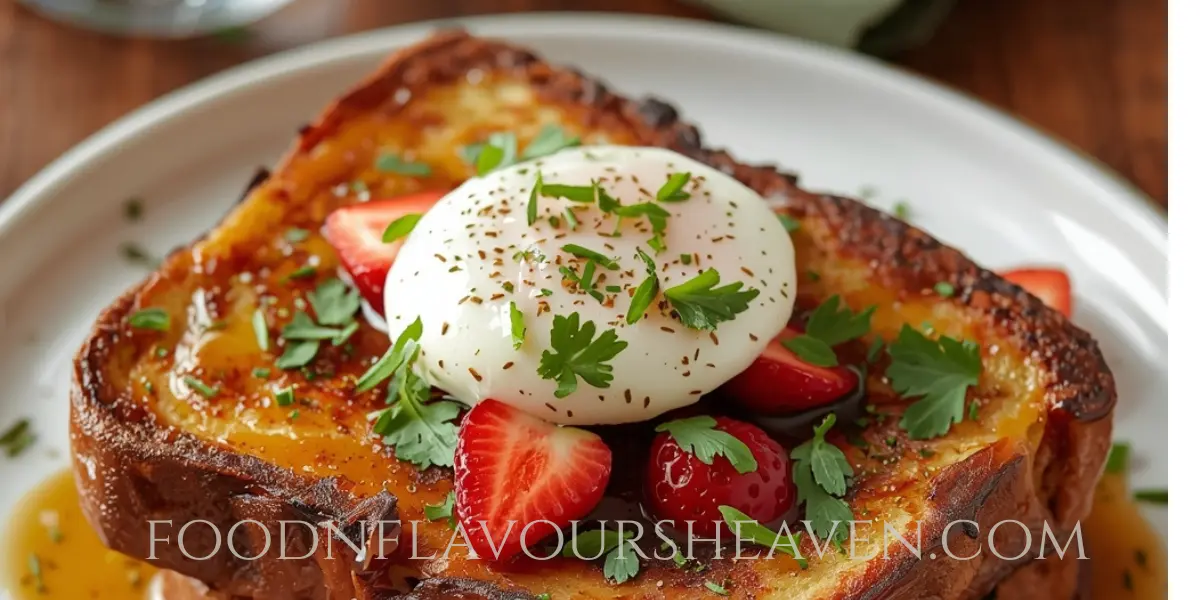
2. Savory Herb French Toast recipe (Brunch Style)
This version challenges breakfast conventions entirely—proving French Toast doesn’t require sweetness to satisfy.
Ingredients:
- 6 slices sourdough or multigrain bread
- 3 large eggs
- ½ cup milk
- ¼ teaspoon garlic powder
- ½ teaspoon dried herbs (thyme, oregano, or Italian seasoning)
- ½ teaspoon black pepper
- ¼ teaspoon salt
- 2 tablespoons grated parmesan cheese
- 2–3 tablespoons butter or olive oil
- Toppings: sautéed mushrooms, avocado, poached eggs, hollandaise
Process:
- Beat eggs in shallow bowl until smooth
- Add milk, garlic powder, herbs, pepper, salt, and parmesan—whisk thoroughly
- Heat butter or olive oil in pan over medium heat
- Soak bread briefly (15–20 seconds per side to maintain structure)
- Cook 2–3 minutes per side until golden and crispy
- Top with sautéed mushrooms, avocado slices, or poached egg
- Garnish with fresh herbs and extra parmesan
Why this works: Eliminating sugar shifts flavor profile toward umami richness. Parmesan adds saltiness and helps crust development. Olive oil provides different fat character than butter.
3. Stuffed Cream Cheese French Toast recipe (Decadent Style)
This version transforms French Toast from breakfast item into dessert-breakfast hybrid—maximum indulgence, balanced execution.
Ingredients:
- 6 thick bread slices (brioche or challah preferred)
- 4 ounces cream cheese, softened
- 2 tablespoons powdered sugar
- ½ teaspoon vanilla extract
- 3 large eggs
- ½ cup milk
- 1 teaspoon vanilla extract (for custard)
- ½ teaspoon cinnamon
- Pinch salt
- 2–3 tablespoons butter
- Toppings: fresh strawberries, blueberries, whipped cream
Process:
- Cut bread slices horizontally creating pockets without separating completely
- Mix cream cheese, powdered sugar, and vanilla until smooth
- Spread cream cheese mixture generously inside bread pockets
- Whisk eggs, milk, vanilla, cinnamon, and salt in shallow dish
- Heat butter in pan over medium-low heat (lower than standard)
- Dip stuffed bread carefully into custard, 25–30 seconds per side
- Cook 3–4 minutes per side (longer cooking ensures filling warms thoroughly)
- Top with fresh berries, dust with powdered sugar, add whipped cream if desired
Why this works: Lower heat prevents burning while filling melts. Cream cheese adds protein and richness. Stuffing creates surprise element that elevates simple dish.
Nutritional Values in French Toast recipe
French Toast gets unfair criticism as “empty carbs,” but nutritionally, it’s more balanced than breakfast pastries or sugary cereals.
Eggs and milk provide:
- High-quality protein for muscle maintenance
- B vitamins for energy metabolism
- Calcium for bone health
- Vitamin D when using fortified milk
Typical Nutrition (Per 2-Slice Serving):
- Calories: 320–380 depending on bread type and butter quantity
- Protein: 12–15g from eggs and milk
- Carbohydrates: 35–42g primarily from bread
- Fat: 14–18g from eggs, milk, butter
- Fiber: 2–4g (higher with whole grain bread)
- Sugar: 8–12g (increases significantly with syrup additions)
Savory French Toast tends to be lower in added sugars. Whole grain versions increase fiber and micronutrients. Adding Greek yogurt topping or nut butter increases protein density further.
From personal cooking experience, French Toast works well for:
- Post-workout breakfast (protein recovery)
- Weekend family meals
- Budget-friendly cooking
- Using leftover bread effectively
Tips for Making French Toast recipe Better
Most French Toast recipe problems come from technique errors, not ingredient quality.
Here’s what consistently improves results:
Use day-old bread: Fresh bread becomes soggy. Leave bread uncovered overnight, or toast lightly before soaking. Stale bread absorbs custard without falling apart.
Control soaking time: 20–30 seconds total prevents mushiness. Thicker bread tolerates longer soaking. Thin bread needs quick dips.
Heat management matters: Medium heat creates golden crust without burning. Too hot burns exterior before cooking interior. Too cool creates greasy, pale results.
Butter in small portions: Add butter per batch, not all at once. Prevents burning accumulation and maintains clean flavor.
Rest before cooking: Let soaked bread rest 30 seconds on wire rack. Excess custard drips off, preventing soggy bottoms.
Partial blending creates depth: Whisking eggs thoroughly prevents streaking. Uniform custard ensures even coating.
Keep finished pieces warm: Use 200°F oven while cooking remaining batches. Serves entire meal hot simultaneously.
One contrarian truth: expensive artisan bread doesn’t automatically improve French Toast. Proper technique with basic bread beats poor technique with premium bread every time.
Which Season Is Best for French Toast recipe?
Most people associate French Toast with lazy weekends, but in real kitchens, it adapts to seasonal ingredients and temperature shifts.
Fall & Winter: Classic cinnamon versions with warm spices, maple syrup, apple compote, and roasted nuts create comfort during cold months.
Spring: Lighter preparations with lemon zest, fresh berries, honey drizzle, and mascarpone feel appropriate as weather warms.
Summer: Tropical variations with coconut milk custard, grilled pineapple, mango, and lime work surprisingly well despite heat.
Cold mornings increase cravings for warmth and sweetness, but savory French Toast variations work year-round when paired with seasonal vegetables and proteins. The dish’s adaptability explains its persistence across cultures and climates.
FAQs
Can I make French Toast recipe without milk?
Yes. Use water, plant-based milk (almond, oat, coconut), or even fruit juice. Texture changes slightly, but eggs provide sufficient binding. Cream creates richness, while water keeps things lighter.
Why does my French Toast recipe turn out soggy?
Over-soaking causes this. Limit custard contact to 20–30 seconds total. Use day-old bread for better structural integrity. Cook immediately after soaking rather than letting sit.
Can French Toast be made ahead?
Yes. Cook completely, cool, then refrigerate up to 3 days or freeze up to 3 months. Reheat in toaster oven at 350°F for 5–7 minutes to restore crispness.
Which bread works best for French Toast?
Brioche and challah create richest results due to egg content. Sourdough adds tangy complexity. Standard white bread works perfectly fine as the thickness matters more than bread type. Avoid very fresh, soft sandwich bread.
How do I prevent French Toast from sticking?
Use adequate butter or oil. Ensure pan reaches proper temperature before adding bread. Non-stick pans help, but cast iron creates superior crust when properly seasoned and heated.
Conclusion
In conclusion, French Toast works not because it’s fancy, but because it’s honest. It transforms overlooked bread into something worth waking for. It adapts to dietary preferences, seasonal ingredients, budget constraints, and skill levels. Over years of making it across different kitchens and breakfast scenarios, I’ve found that the best versions aren’t complicated—they’re intentional. Intentional about bread selection, egg ratios, heat control, soaking time, and topping restraint.
Whether you prefer classic cinnamon French Toast, savory herb variations, or stuffed cream cheese decadence, the foundation stays the same: good bread structure, proper custard absorption, steady heat control, and texture awareness. When you understand those principles, French Toast becomes less of a recipe and more of a reliable breakfast skill—one you can repeat, adjust, and improve without ever measuring precisely again.