3 Fusion Rice Recipes That’ll Transform Your Dinner Game Tonight
Most people approach fusion rice recipes thinking they need exotic ingredients, professional training, or complicated techniques. After experimenting across different culinary traditions, budgets, and kitchen setups, I’ve discovered something different: exceptional fusion rice is about understanding flavor balance, respecting ingredient functions, timing grain absorption, and building aromatic layers. When these four elements align, you don’t need Michelin-star skills to create restaurant-quality results.
Fusion rice recipes endure across cultures, income levels, and cooking expertise because rice itself is neutral territory. It accepts bold spices, delicate herbs, rich proteins, and acidic elements equally well. That’s why this approach works for weeknight efficiency, dinner party impressions, meal prep convenience, and creative exploration simultaneously.
Instead of listing ingredients first, let’s start with the goal: perfect fusion rice feels cohesive yet surprising, familiar yet innovative, satisfying yet refined. Now let’s work backward through ingredients, techniques, three distinct recipes, nutrition facts, and practical wisdom gained from real kitchen experience. Discover a variety of cooking techniques in our Chicken and Rice Recipe collection to achieve golden, crispy perfection every time.
Ingredients for Fusion Rice Recipes
Fusion rice ingredients appear straightforward initially, but each component serves specific functions in moisture control, flavor development, and textural complexity. Over time, I stopped viewing them as pantry basics and started treating them as cultural ambassadors.
Core Foundation:
- Rice varieties (basmati, jasmine, arborio, short-grain)
- Proteins (chicken, shrimp, tofu, beef)
- Aromatics (onions, garlic, ginger, shallots)
- Cooking liquids (stock, coconut milk, wine)
- Fats (olive oil, sesame oil, ghee, butter)
Flavor Architects:
- Spice blends (garam masala, five-spice, za’atar)
- Fresh herbs (cilantro, basil, mint, parsley)
- Acid components (lime, lemon, vinegar, tamarind)
- Umami sources (soy sauce, miso, fish sauce, parmesan)
- Vegetables (bell peppers, peas, mushrooms, tomatoes)
Luxury Additions:
- Saffron threads, truffle oil
- Sun-dried tomatoes, kalamata olives
- Aged cheeses, premium nuts
- Specialty chilies, pickled elements
From experience, quality stock matters more than expensive spices. Fresh aromatics outperform dried versions significantly. Combining contrasting flavor profiles thoughtfully creates sophistication that single-culture cooking rarely achieves.
How to Make Fusion Rice Recipes
Three distinct preparation methods follow, each representing different cultural intersections and flavor philosophies.
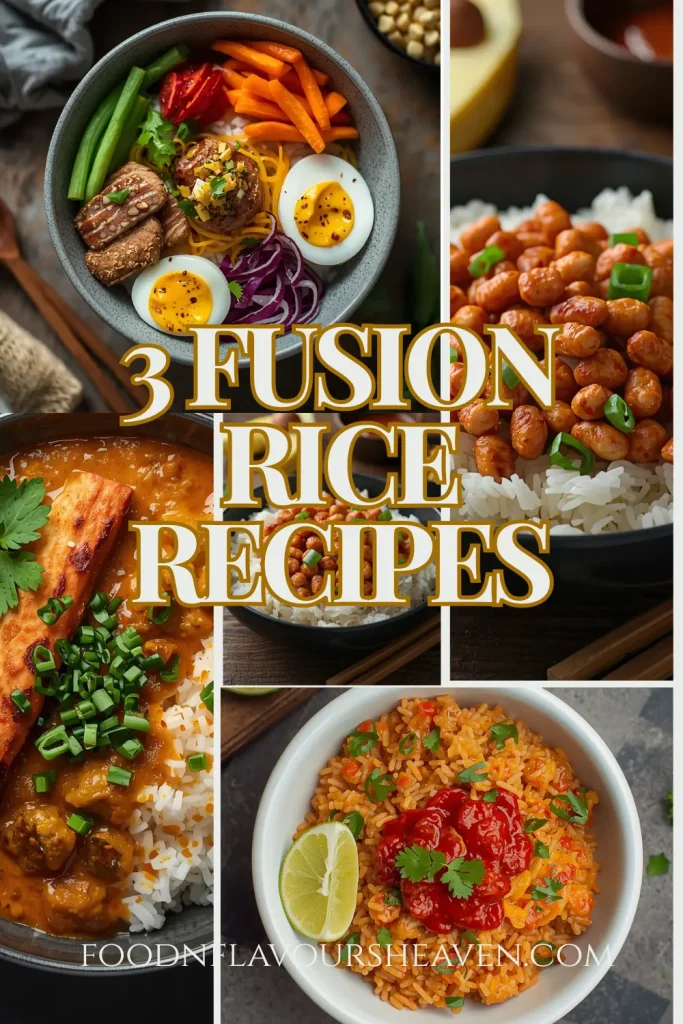
1. Mediterranean-Asian Saffron Rice Bowl (Luxury Fusion)
This version merges Italian risotto technique with Thai aromatics and Indian spicing—unexpected yet harmonious.
Ingredients:
- 1½ cups (300g) arborio rice
- 4 boneless chicken thighs, cubed
- 4 cups (960ml) chicken stock
- ½ cup (120ml) coconut milk
- 3 tablespoons olive oil
- 2 shallots, minced
- 4 garlic cloves, sliced
- 2 tablespoons fresh ginger, julienned
- Large pinch saffron threads
- 1 teaspoon cumin seeds
- 2 tablespoons fish sauce
- Fresh Thai basil and mint
- Toasted pine nuts
- Lemon wedges
Process:
- Bloom saffron in 2 tablespoons warm stock, set aside
- Heat olive oil in wide pan over medium-high heat
- Sear chicken pieces 4-5 minutes until golden, remove and reserve
- Add cumin seeds to same pan, toast 30 seconds
- Stir in shallots, cook 3 minutes until translucent
- Add garlic and ginger, cook 1 minute until fragrant
- Add arborio rice, stir constantly 2-3 minutes until edges turn translucent
- Pour in saffron-infused stock, stir well
- Add remaining stock gradually while stirring occasionally
- After 15 minutes, add coconut milk and fish sauce
- Return chicken to pan, cook 5 more minutes
- Remove from heat when rice is creamy but al dente
- Rest 3 minutes, garnish with herbs, pine nuts, lemon
Why this works: Arborio’s starch creates creaminess traditionally achieved through cheese, while coconut milk adds richness without heaviness. Fish sauce provides umami depth Italian cooking achieves through parmesan. Saffron bridges Mediterranean and Asian flavor expectations beautifully.
2. Korean-Mexican Gochujang Rice Fiesta (Bold Fusion)
This preparation combines Korean heat with Mexican comfort—demonstrating how contrasting cuisines share common flavor foundations.
Ingredients:
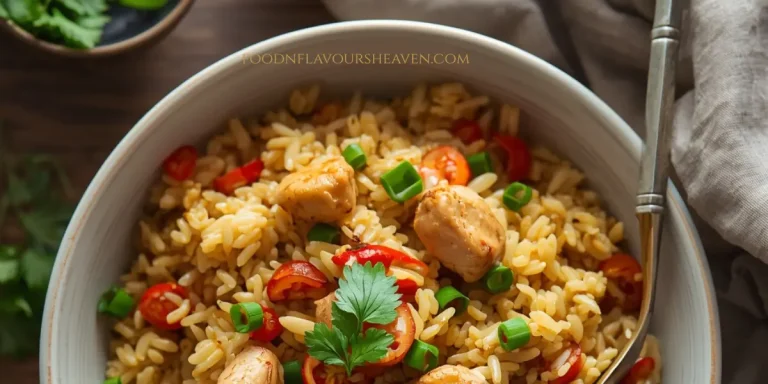
- 2 cups (400g) short-grain white rice
- 1 pound (450g) beef sirloin, thinly sliced
- 3 cups (720ml) beef stock
- 3 tablespoons gochujang paste
- 2 tablespoons soy sauce
- 1 can (400g) black beans, drained
- 1 cup (150g) corn kernels
- 1 red onion, diced
- 3 garlic cloves, minced
- 2 tablespoons sesame oil
- 1 tablespoon lime juice
- 1 avocado, sliced
- Queso fresco, crumbled
- Fresh cilantro and sesame seeds
Process:
- Rinse rice until water runs clear, drain completely
- Mix gochujang, soy sauce, and lime juice in small bowl
- Heat sesame oil in large pot over high heat
- Sear beef slices 2-3 minutes, remove and set aside
- Add onion to same pot, cook 3 minutes
- Stir in garlic, cook 1 minute
- Add rice, stir to coat with aromatics
- Pour in beef stock and half the gochujang mixture
- Bring to boil, reduce to lowest heat
- Cover tightly, cook 18 minutes without disturbing
- Add black beans and corn, stir gently
- Return beef with remaining gochujang sauce
- Cover, cook 3 more minutes
- Garnish with avocado, queso fresco, cilantro, sesame seeds
Why this works: Gochujang’s fermented complexity mirrors Mexican mole depth. Black beans and corn provide textural contrast short-grain rice needs. Queso fresco cools heat while adding creamy saltiness that complements both cuisines.
3. Indian-Japanese Curry Rice Evolution (Comfort Fusion)
This version proves Japanese curry rice and Indian curry share enough DNA for seamless integration.
Ingredients:
- 1½ cups (300g) jasmine rice
- 1 pound (450g) chicken breast, cubed
- 2½ cups (600ml) chicken stock
- 1 cup (240ml) coconut milk
- 2 tablespoons curry powder
- 1 teaspoon garam masala
- 2 tablespoons butter
- 1 large onion, sliced
- 2 carrots, diced
- 2 potatoes, cubed
- 3 garlic cloves, minced
- 1 tablespoon ginger paste
- 2 tablespoons soy sauce
- 1 tablespoon honey
- Pickled ginger and nori strips for garnish
Process:
- Cook jasmine rice separately in 2¼ cups water, set aside
- Melt butter in deep skillet over medium heat
- Add onions, cook 5 minutes until caramelized
- Stir in garlic, ginger paste, curry powder, garam masala and cook for 2 minutes
- Add chicken pieces, brown on all sides
- Add carrots and potatoes, stir to coat with spices
- Pour in stock, coconut milk, soy sauce, and honey
- Bring to boil, reduce heat, simmer 20 minutes until vegetables tender
- Sauce should thicken naturally because if we let it too thin, simmer uncovered 5 more minutes
- Serve curry over jasmine rice
- Garnish with pickled ginger and nori strips
Why this works: Japanese curry uses similar base vegetables as Indian versions but adds sweetness. Combining both spice profiles creates layered complexity. Soy sauce bridges umami expectations from both traditions while honey balances heat and earthiness.
Nutritional Values and Servings
Fusion rice recipes deliver balanced macronutrients while incorporating diverse micronutrients from multiple culinary traditions.
Mediterranean-Asian Bowl (Per Serving):
- Calories: 520
- Protein: 28g
- Carbohydrates: 58g
- Fat: 18g
- Fiber: 2g
- Serves 4 generously
Korean-Mexican Rice (Per Serving):
- Calories: 485
- Protein: 32g
- Carbohydrates: 62g
- Fat: 14g
- Fiber: 8g
- Serves 4-5
Indian-Japanese Curry (Per Serving):
- Calories: 445
- Protein: 26g
- Carbohydrates: 55g
- Fat: 12g
- Fiber: 4g
- Serves 4
Adding vegetables increases vitamin and mineral density significantly. Coconut milk provides medium-chain triglycerides. Fermented elements like gochujang contribute probiotics. These fusion rice recipes work excellently for muscle recovery, sustained energy, and complete meal nutrition.
Tips for Making Fusion Rice Recipes Better
Most fusion rice recipes failures stem from imbalanced flavors and improper rice cooking, not ingredient incompatibility.
Liquid precision matters: Different rice varieties need specific ratios. Arborio needs gradual addition, jasmine needs 1.5:1, short-grain needs 1.75:1. Adjust based on variety, not recipe assumptions.
Layer flavors strategically: Toast whole spices first, bloom pastes in fat second, add aromatics third, incorporate liquids fourth. Sequential building creates depth single-stage mixing cannot achieve.
Don’t disturb cooking rice: Once liquid is added and boiling begins, reduce heat and leave covered. Every lid lift releases essential steam. Trust timing over visual checking.
Rest after cooking: Five minutes off-heat with lid on allows moisture redistribution. Rice finishes cooking, proteins stay tender, flavors marry completely.
Balance contrasting elements: Spicy needs cooling components. Rich needs acidic brightness. Sweet needs salty grounding. Heavy needs fresh herbs. Fusion requires more careful balancing than single-culture cooking.
Taste throughout preparation: Fusion rice recipes evolve during cooking. Sample and adjust seasoning in stages. What tastes balanced initially may need correction after all elements combine.
Use quality stock: This forms your flavor foundation. Homemade or premium store-bought makes noticeable difference. Water creates bland results regardless of other ingredients.
One unexpected truth: fusion rice recipes actually tolerate mistakes better than traditional preparations. Multiple flavor profiles provide more correction opportunities. If something tastes off, contrasting elements can rebalance it.
Conclusion
In conclusion, fusion rice recipes work not because they’re trendy, but because they’re honest. They acknowledge that food evolves, cultures interact, and kitchens benefit from creative boundary-crossing. They transform familiar ingredients into exciting meals that satisfy both adventurous eaters and comfort-seekers. Over years of experimenting across different flavor combinations, cooking methods, and cultural intersections, I’ve learned that successful fusion isn’t random. it’s actually an intentional move. Intentional flavor pairing, cooking technique selection, textural contrast, and presentation thoughtfulness.
Whether you prefer Mediterranean-Asian elegance, Korean-Mexican boldness, or Indian-Japanese comfort, the foundation remains consistent: proper rice cooking, flavor layering, heat control, and cultural respect. When you understand those principles, fusion rice recipes become less about following instructions and more about confident creativity in a way that something you can modify, personalize, and master through practice.
FAQ
Can brown rice work in fusion rice recipes?
Yes, though cooking time extends to 40-45 minutes and liquid ratio increases to 2.5:1. Brown rice adds nutty complexity that complements fusion flavors while providing superior nutrition.
Why does fusion rice sometimes taste muddy?
Too many competing flavors without hierarchy. Choose one dominant cuisine profile, let others support. Also ensure proper seasoning layers rather than dumping everything simultaneously.
Can fusion rice recipes be prepared ahead?
Absolutely. Cool completely, refrigerate up to 4 days. Reheat gently with small liquid addition. Flavors often improve after 24 hours as they meld together.
Which rice variety works best for fusion cooking?
Depends on desired texture. Jasmine for light, fragrant dishes. Arborio for creamy preparations. Short-grain for sticky, cohesive results. Basmati for aromatic, separate grains. Match rice to technique.
How do I prevent rice from sticking?
Use proper liquid ratios, maintain steady low heat after boiling, avoid stirring once covered, and ensure heavy-bottomed cookware. Light sticking (socarrat) actually adds desirable texture.