
3 Low Carb Recipes That Transform Energy, Burn Fat, and Taste Incredible
Most people believe low carb cooking is restrictive, bland, and hard to sustain. In practice, it’s often the opposite. When carbs drop, flavor creativity rises. Instead of chasing fullness through bread, rice, and sugar, low carb recipes rely on protein balance, healthy fats, fiber-rich vegetables, and smart cooking techniques that stabilize energy and reduce cravings.
I’ve seen clients shift from calorie-counting burnout to consistent results simply by adjusting ingredients, not portions. Low carb eating isn’t about eliminating pleasure it’s about designing meals that work with your metabolism instead of against it. And surprisingly, many traditional comfort foods adapt beautifully into low carb versions without losing texture, taste, or satisfaction.
Let’s reverse the usual recipe logic: instead of asking “What carbs should I remove?” ask “What nutrients should I build around?” That mindset leads to meals that feel indulgent but perform like functional fuel ideal for weight loss, blood sugar control, keto lifestyles, and general wellness. for adding a cabbage recipe with this you can check these cabbage recipes
Ingredients List
Rather than rigid meal rules, low carb cooking works best when you master ingredient ecosystems. These ingredients show up across hundreds of recipes and allow fast meal creation without boredom.
Core Proteins
- Chicken breast and thighs
- Eggs
- Salmon, tuna, shrimp
- Ground turkey or beef
- Tofu and tempeh
Low Carb Vegetables
- Zucchini
- Cauliflower
- Broccoli
- Spinach
- Bell peppers
- Mushrooms
Healthy Fats
- Olive oil
- Avocado oil
- Coconut oil
- Butter or ghee
- Full-fat cheese
Flavor Builders
- Garlic
- Onion powder
- Paprika
- Chili flakes
- Fresh herbs (basil, parsley, cilantro)
- Lemon juice
- Mustard
Low Carb Pantry Staples
- Almond flour
- Coconut flour
- Psyllium husk
- Unsweetened almond milk
- Soy sauce or coconut aminos
These ingredients allow flexibility across ketogenic, diabetic-friendly, paleo-style, and low glycemic meal plans without repetitive textures or flavors.
Three Different Low Carb Recipes
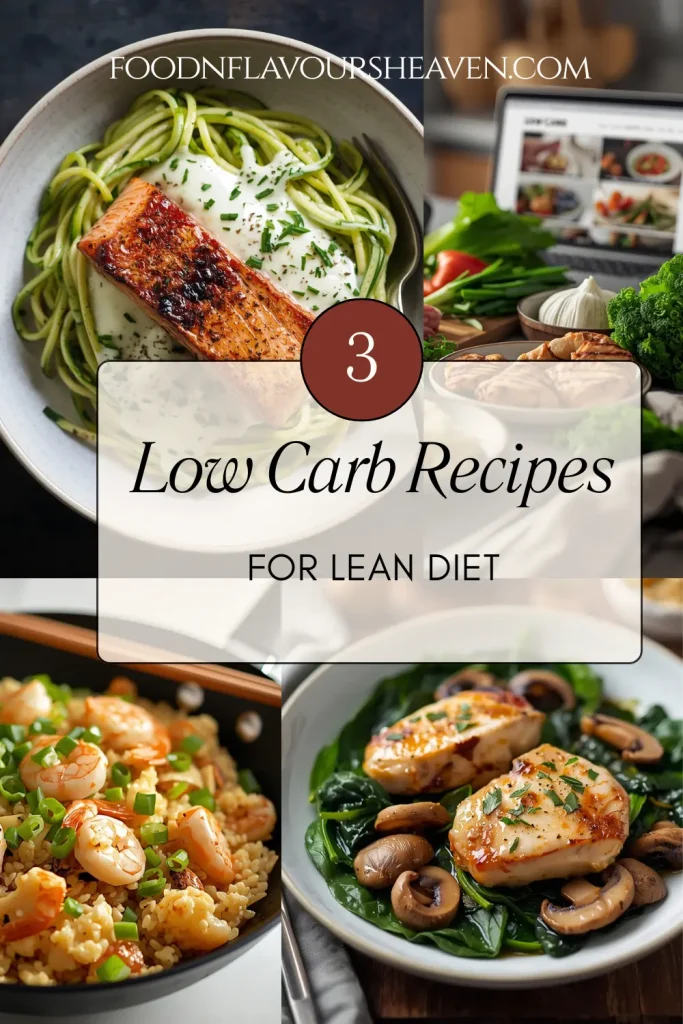
1. Garlic Butter Chicken with Spinach and Mushrooms
Why this works:
This recipe combines lean protein, fiber-rich vegetables, and fat-soluble nutrients in a skillet-friendly structure that supports satiety, blood sugar stability, and flavor depth.
Ingredients
- 2 boneless chicken breasts
- 2 tbsp butter
- 3 cloves garlic, minced
- 1 cup sliced mushrooms
- 2 cups fresh spinach
- Salt and black pepper
- 1 tsp Italian seasoning
Steps
- Season chicken with salt, pepper, and Italian seasoning.
- Heat butter in a skillet over medium heat.
- Sear chicken 5–6 minutes per side until golden and cooked through.
- Remove chicken. Add garlic and mushrooms to the pan and sauté 2–3 minutes.
- Stir in spinach until wilted.
- Return chicken to pan and spoon butter sauce over it.
Macros (approx per serving):
- Carbs: 4–6g
- Protein: 30g
- Fats: 18g
2. Cauliflower Fried Rice with Shrimp
Why this works:
This recipe reframes a high-carb classic into a nutrient-dense, fast-digesting meal that improves insulin response while preserving savory texture and aroma.
Ingredients
- 2 cups cauliflower rice
- 150g shrimp, peeled and deveined
- 1 egg
- 2 tbsp sesame oil or olive oil
- 2 tbsp soy sauce or coconut aminos
- ½ cup chopped bell peppers
- 2 tbsp chopped green onions
- 1 tsp grated ginger
Steps
- Heat oil in pan. Add shrimp and cook until pink. Remove.
- Add cauliflower rice, ginger, and peppers. Stir-fry 3–4 minutes.
- Push to side. Scramble egg in pan.
- Add shrimp back in and drizzle soy sauce.
- Garnish with green onions and serve.
Macros (approx per serving):
- Carbs: 6–8g
- Protein: 28g
- Fats: 14g
3. Zucchini Noodle Alfredo with Grilled Salmon
Why this works:
Healthy fats paired with omega-3-rich fish and fiber-rich vegetables optimize hormonal balance, inflammation control, and long-lasting fullness.
Ingredients
- 2 medium zucchini, spiralized
- 2 salmon fillets
- ½ cup heavy cream
- ¼ cup grated parmesan
- 1 tbsp butter
- 1 clove garlic
- Salt and pepper
Steps
- Season salmon and grill or pan-sear until flaky.
- In saucepan, melt butter. Add garlic and cream.
- Simmer 3 minutes, then stir in parmesan.
- Toss zucchini noodles in sauce briefly (don’t overcook).
- Top with salmon and serve.
Macros (approx per serving):
- Carbs: 5g
- Protein: 32g
- Fats: 22g
Other Recipes That Pair Well With These Low Carb Recipes
Low carb meals improve when designed as meal systems instead of isolated dishes. These recipes pair naturally with the meals above:
- Avocado Cucumber Salad – adds hydration and potassium balance
- Roasted Brussels Sprouts with Parmesan – fiber + flavor synergy
- Egg Muffins with Spinach and Cheese – perfect breakfast side
- Greek Yogurt Herb Dip – high-protein sauce for veggies
- Cloud Bread or Almond Flour Rolls – bread texture without carb spikes
Combining recipes strategically improves satiety cycles and prevents rebound hunger something many traditional diets fail to address.
How These Are Different from Other Recipes
Most low carb recipes online simply replace bread with lettuce or rice with vegetables. That’s substitution, not system design.
These recipes differ in five key ways:
1. Metabolic Structure
Each meal balances protein, fats, and fiber intentionally to support insulin control and stable energy not just carb reduction.
2. Texture Psychology
Crunch, creaminess, chew, and umami are preserved so meals feel emotionally satisfying reducing binge risk.
3. Micronutrient Density
Instead of empty replacements, ingredients provide magnesium, potassium, omega-3s, antioxidants, and B vitamins.
4. Digestive Flow
Meals avoid starch overloads that slow digestion and cause bloating improving gut comfort.
5. Sustainability Design
Recipes use affordable, repeatable ingredients that fit into real-world grocery habits not niche diet shopping.
Contrary to popular belief, low carb cooking isn’t restrictive it’s structurally more flexible than carb-centric cooking once you understand ingredient dynamics.
Tips for Making Low Carb Recipes
These aren’t beginner tips they’re optimization principles from real kitchen practice.
Cook Vegetables in Fat
Fat improves absorption of vitamins A, D, E, and K. Steaming alone reduces flavor and satiety.
Season Aggressively
Low carb meals need bold seasoning herbs, acids, garlic, chili flakes to compensate for missing starch textures.
Build Protein First
Start your meal design with protein, then add fats and vegetables around it. This stabilizes hunger hormones.
Avoid Overcooking Vegetables
Mushy vegetables increase carb absorption rate and reduce satiety response.
Rotate Proteins Weekly
Switch between poultry, seafood, eggs, red meat, and plant protein to prevent nutrient imbalance.
Use Acid Strategically
Lemon juice, vinegar, mustard, and fermented sauces improve digestion and flavor perception.
Servings
These low carb recipes are optimized for 2 servings each, but scale easily:
- Family meals: Double ingredients.
- Meal prep: Store cooked meals up to 3 days refrigerated.
- Weight loss plans: Pair with side salads or broth-based soups.
- Athletic diets: Add avocado, olive oil drizzle, or nuts for higher fat needs.
Each recipe averages:
- Calories: 350–450 per serving
- Net Carbs: 4–8g
- Protein: 28–35g
FAQs
Are low carb recipes good for weight loss?
Yes. Low carb meals reduce insulin spikes, stabilize hunger hormones, and improve fat oxidation, making fat loss easier without calorie obsession.
Can I eat low carb recipes without going keto?
Absolutely. Low carb eating ranges from 50–150g carbs per day and still improves metabolic health without strict ketosis.
Are low carb meals safe long-term?
Yes when balanced with vegetables, healthy fats, fiber, and adequate protein. Long-term studies show benefits for blood sugar, cholesterol, and weight stability.
Do low carb diets cause low energy?
No initial adaptation may feel sluggish, but once fat metabolism increases, most people experience steadier energy and fewer crashes.
Can vegetarians eat low carb recipes?
Yes. Eggs, cheese, tofu, tempeh, nuts, seeds, and low carb vegetables support vegetarian low carb lifestyles.
How do I avoid boredom on low carb recipes?
Rotate sauces, seasonings, textures, and cooking methods grilling, roasting, sautéing, baking instead of changing ingredients constantly.
Are fruits allowed on low carb recipes?
Yes berries, avocado, coconut, and olives fit well in low carb frameworks.
Conclusion
Low carb recipes work not because carbs are “bad,” but because modern diets overuse them in processed forms that disrupt appetite regulation, energy balance, and metabolic health. When you replace refined starches with whole proteins, healthy fats, and fiber-rich vegetables, something unexpected happens hunger stabilizes, flavor improves, and meals become simpler instead of more complex.
These low carb recipes don’t just reduce carbs they restructure how meals function inside the body. They improve nutrient absorption, digestion efficiency, hormonal balance, and long-term compliance. That’s why people who adopt low carb cooking sustainably stop thinking about dieting altogether.
If you’re looking for meals that taste indulgent, cook quickly, support fat loss, stabilize blood sugar, and feel emotionally satisfying low carb recipes aren’t a compromise. They’re an upgrade.


One Comment